
Sell a median New Zealand home ($760,000, as of July 2026) through a typical agency and the commission comes to roughly $26,450 including GST. Add the marketing campaign most agencies charge on top and you’re past $28,000. All of it is the cost of selling the house, gone before anyone’s moved a box.
For me, though, the idea started on foot. Walk around my hometown of Christchurch and you can’t miss the billboards — real estate agents advertising themselves. Their faces, their awards, the number of homes they’ve moved this year, the hundreds of millions they’ve moved them for. Rarely the homes themselves. I’m half French — Kiwi-raised with a French mum, a childhood measured out in three-month stints in France every couple of years, and a French partner today — and I’ve never seen another country where the property industry markets its salespeople this hard instead of the thing actually being sold. Somewhere between one billboard and the next, a question lodged in my head and never left: imagine if agents spent as much money advertising the houses they sell as they spend advertising themselves.
The second trigger was finding out what that machine costs. Every business I’ve built has started from the same allergy — I can’t walk past inefficiency — and when I finally dug into what Kiwis pay to sell a house, and itemised what actually arrives in exchange, the answer was nowhere near proportional to the bill.
I kept turning that over. Not because agents are villains. Most work hard, and the good ones earn their keep on difficult sales. What bothered me is that the price had never really been questioned: a percentage of the house, for work that is mostly the same whether the house sells for $600,000 or $1.6 million. In almost every other industry, that pricing model would have been pulled apart years ago.
I’ve spent my career in one of those industries. My other company, Payper, charges for PR results instead of monthly retainers, because retainers quietly reward effort over outcomes. Real estate commission has the opposite problem. It rewards the outcome enormously while the actual work, from photography to listings to open homes to paperwork, has a knowable, fixed cost. We checked. You can price every line of it.
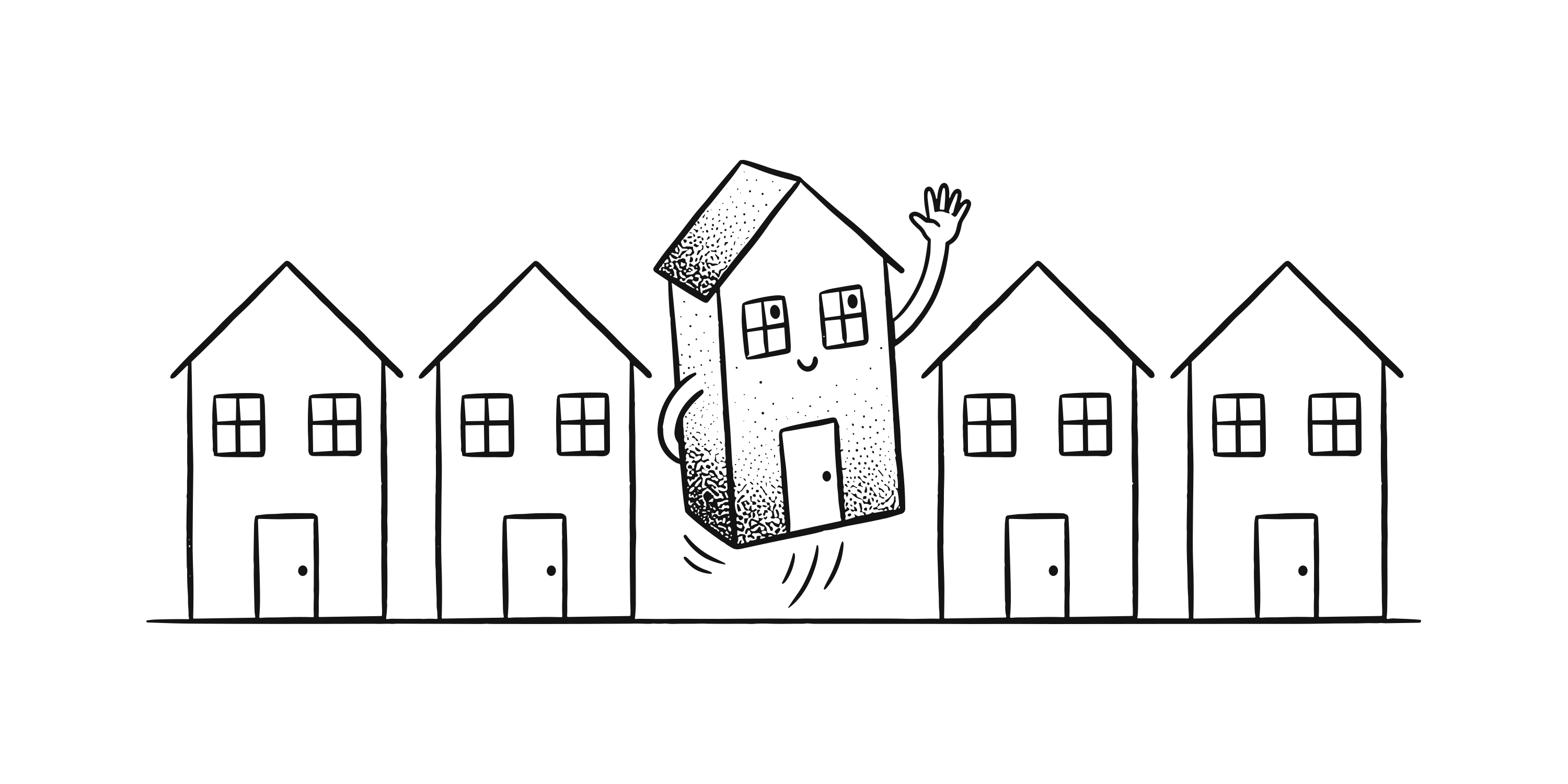
So that’s what Celby is: every tool, professional and step you need to sell your home privately, for one flat fee of $8,000 including GST. Professional photography, your listing, signage and brochures, a conveyancing lawyer for your sale agreement, and a dashboard that walks you through the whole thing, from pricing research and documents to open homes, enquiries and settlement day.
And what Celby isn’t: a real estate agency. You sell your home. You set the price, you meet the buyers, you make every decision. We’re the toolkit, not the middleman, and that’s both the legal design and the philosophical one. New Zealand law has always allowed you to sell your own home, and the government’s own guidance at settled.govt.nz explains how. What’s been missing is everything around it: the professional polish, the process, and someone to make the scary parts plain. That’s the gap we built for.
Why now? Because the tools finally exist. Not long ago, the professional side of a sale — the photography, the floor plan, the brochures, the paperwork — genuinely needed an agency’s machinery behind it. Today a phone scans a perfect floor plan in minutes, brilliant photographers and videographers work in every corner of New Zealand because the gear stopped costing a fortune, modern design tools turn a template into a full marketing kit in an afternoon, and AI is quietly dissolving the moats around a dozen old-school industries at once. Real estate is one of them. The parts of the job worth paying for have never been cheaper to deliver well — the industry’s prices just haven’t noticed yet.
The honest bit? The evidence on private selling is mixed, and we’d rather tell you that than pretend otherwise. The commission saving is certain. The claim that agents get you a higher price is unproven, and the best studies show agents speed sales up without lifting the price. What sinks private sellers is under-preparation, which happens to be the one thing you can buy, learn, and be walked through. We’ve written up the full evidence, caveats and all, in the Journal, because if we’re asking Kiwis to keep their own $20,000, we should show our working.
I’m building Celby from Christchurch, solo for now, fully self-funded. There’s a particular kind of fun in being the underdog in an industry dominated by giants — and we’re starting the way we mean to continue: a small number of sellers, looked after properly, with honest numbers and no lock-ins. If you’re thinking about selling and you’d rather keep the commission in your own pocket, have a look around. Or just read the guides. They’re free, they’re specific to New Zealand, and they’ll make you a sharper seller whether you use Celby or not.
Sell your home. Keep the profits.
Celby is not a licensed real estate agent. You’re selling your property privately, and all decisions about your sale are your own.
Sources

Keep learning
More straight talk from the Celby Journal.




Ready to sell?
Celby is looking for 10 New Zealand homeowners planning to sell from spring 2026. Founding sellers get every Celby tool, the marketing materials, legal support and hands-on help from the team — at half price, $4,000. Apply below.